Capture Peggys Cove
Best Times to Shoot
Light quality and crowd levels throughout the day.
| Time | Photo Quality | Crowds | Light Character |
|---|---|---|---|
| 🌅 Sunrise | Exceptional | None | Warm golden, long shadows |
| ☀️ 7–9 AM | Excellent | Very few | Soft morning light |
| 🌤️ 9–11 AM | Good | Building | Bright, neutral |
| 😬 11 AM–3 PM | Poor | Peak crowds | Harsh overhead |
| 🌤️ 3–5 PM | Good | Thinning | Warming afternoon |
| 🌇 Golden Hour | Exceptional | Moderate | Warm amber, dramatic |
| 🌆 Blue Hour | Excellent | Few | Cool blue, lighthouse glows |
| 🌙 Night | Special | None | Stars, lighthouse beam |
Best Photography Spots
Six distinct shooting locations, each offering a unique perspective on Peggys Cove.
South of the Lighthouse
Sunrise & Golden HourPosition yourself on the granite rocks to the south and slightly below the lighthouse. This angle captures the lighthouse against the open Atlantic with the rocks in the foreground. The best light arrives at sunrise and in the hour before sunset.
Tidal Pool Reflections
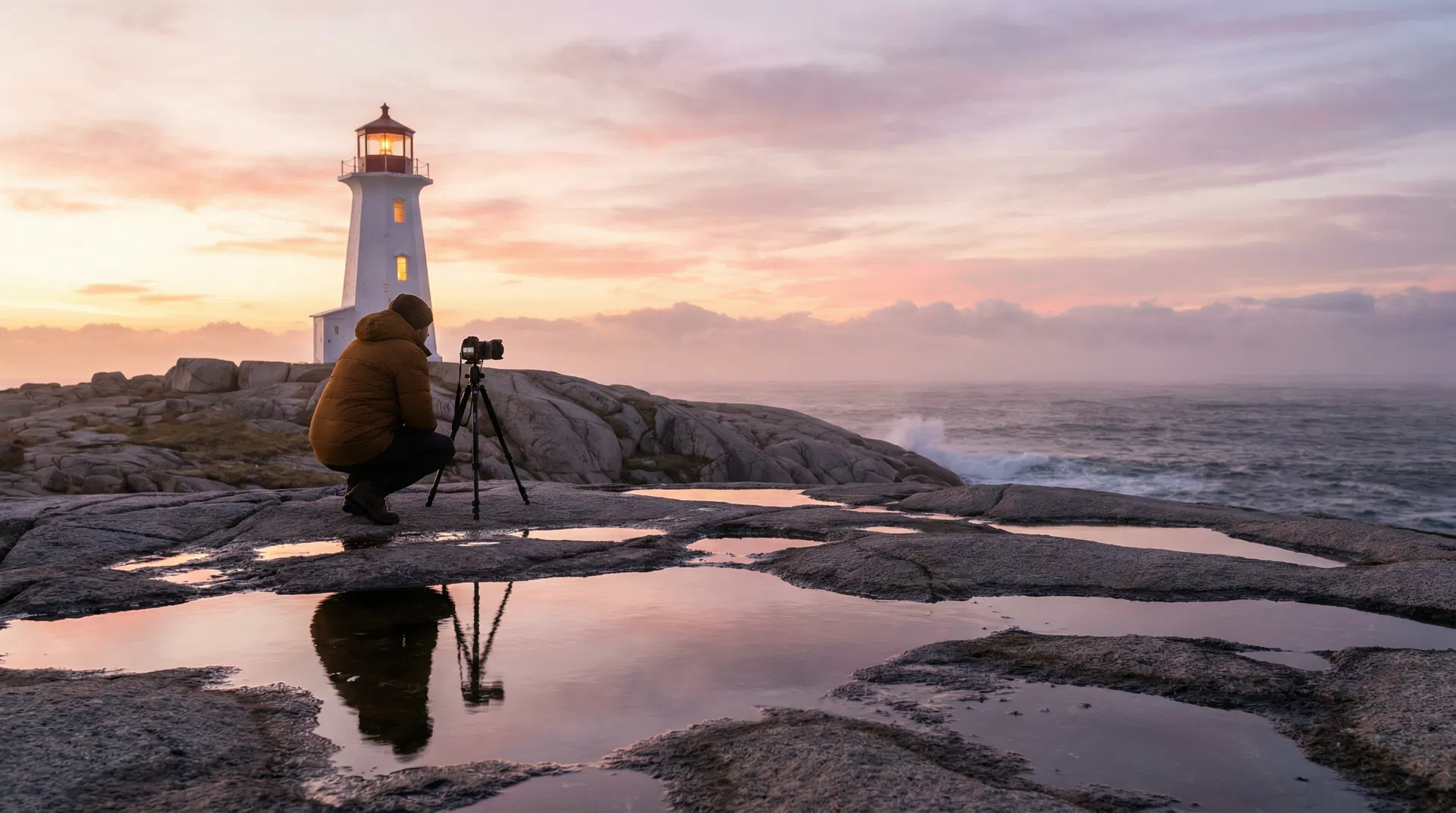
After rain or high tideThe shallow tidal pools on the granite surface create perfect mirror reflections of the lighthouse and sky. Best after rainfall or at high tide when the pools are full. The pastel colours of dawn reflected in still water are extraordinary.
The Fishing Village Harbour
Morning lightWalk into the village and photograph the colourful fishing boats, wooden wharves, and lobster traps with the lighthouse visible in the background. Morning light from the east illuminates the boats beautifully.
Storm Photography
During Atlantic stormsPeggys Cove is world-famous for dramatic storm photography. Waves crash spectacularly against the granite boulders. Use a telephoto lens from a safe distance — NEVER approach the black rocks during storms. The lighthouse glowing against dark clouds is iconic.
Blue Hour & Night
30 min after sunsetThe lighthouse lantern room glows against a deep blue sky in the minutes after sunset. Night photography with a tripod captures star trails above the lighthouse in clear conditions away from city light pollution.
Long Exposure Waves
Any time of dayUse a neutral density (ND) filter to achieve long exposures of 2–30 seconds. The waves become silky smooth white ribbons flowing around the dark granite. Most dramatic during incoming tide with a moderate swell.
Photography Safety
Never approach the black rocks at the water's edge for a photograph. Multiple photographers have been swept into the ocean by rogue waves. Use a telephoto lens from a safe distance for dramatic wave shots. The best photographs are taken from positions of safety.
Essential Tips
Check the tide tables before visiting for tidal pool photography. Low tide exposes the most interesting pools.
A circular polarizer filter dramatically reduces glare on the water and saturates the colours of the granite.
The lighthouse faces roughly southwest — it is backlit in the morning and front-lit in the afternoon.
Bring lens cloths — sea spray can reach surprising distances and will coat your lens.
In winter, the snow-covered granite creates a completely different and equally stunning landscape.
The Peggy's Cove Festival of the Arts (July) brings plein air painters — a unique photographic subject.
Your Peggys Cove Moments
Real photographs taken by visitors like you. Share your shot and be featured here with full credit.
Be the first to share your photo
Submitted photos appear here after review
Join the Community
Tag your Peggys Cove photos with #MyPeggysCove and @peggyscovelighthouse on Instagram — the best shots get featured right here.

@coastal_wanderer
Golden hour at the lighthouse never gets old 🌅 #MyPeggysCove

@novascotia_life
The new viewing deck is stunning — worth every step! #MyPeggysCove

@atlantic_lens
Storm waves crashing at Peggys Cove — shot from the safe deck 📸 #MyPeggysCove

@halifaxexplorer
Lobster roll from Tom's Shack + lighthouse views = perfect day ❤️ #MyPeggysCove

@maritimemoments
Polly's Cove trail in autumn colours 🍂 #MyPeggysCove #hiking

@sunrise_chaser
4:30am alarm was 100% worth it for this sunrise 🌄 #MyPeggysCove
Connect your Instagram Business account to display live #MyPeggysCove posts automatically. Learn how with EmbedSocial →